 Skip-the-line available
 The Best Time to Visit Hue Imperial City
A month-by-month guide to dry season, monsoon flooding, Tết closures and the heat-and-humidity rhythm that shapes every visit to the Complex of Hué Monuments.
Central Vietnam runs on a different weather calendar from the rest of the country. Hue sits between the cool, four-season north of Hanoi and the consistently tropical south of Hồ Chí Minh City, in a climate band shaped by the Trường Sơn mountains to the west and the South China Sea to the east. The result is a sharp two-season pattern — a long dry stretch and a heavy autumn-winter monsoon — overlaid with the cultural rhythms of Tết Nguyên Đán and the biennial Hue Festival. Choosing the right month decides whether you walk the citadel under blue sky, work around an afternoon thunderstorm, or find parts of the Forbidden Purple City temporarily closed for flooding. This guide breaks down the year, the festival calendar, and the day-by-day temperature ranges so you can match your trip to the conditions you want.
How Central Vietnam's Two-Season Climate Shapes a Hue Visit
Hue's climate is dominated by two regimes: a dry-and-hot season running roughly March to August, and a rainy season running September to December that produces some of the highest rainfall totals recorded anywhere in Vietnam. The transition months — January, February and early September — are the cooler shoulder windows. The city sits on the Perfume River (Sông Hương) at low elevation, which is why the Forbidden Purple City and the lower-lying parts of the Imperial Citadel are vulnerable to autumn flooding when the river overtops its banks. The Trường Sơn range to the west blocks the southwest summer monsoon, which is why Hue stays drier than Laos through July and August, but the same range traps northeast moisture in autumn, concentrating rainfall on the central coast.
Daytime temperatures track the seasons closely. February averages around 20–24°C and feels mild for European visitors arriving from winter. By May daytime highs cross 32°C and stay there until late August, regularly touching 38°C with high humidity. October and November bring temperatures back to the mid-20s but with frequent heavy rain. December and January are cool by central-Vietnam standards — daytime around 18–22°C, occasionally cooler in the evening — and pleasantly quiet, although damp. Lightweight long sleeves, a wide-brimmed hat and a packable rain layer cover almost every Hue scenario; only the dry-season midday demands proper sun protection.
Month-by-Month: What to Expect Across the Year
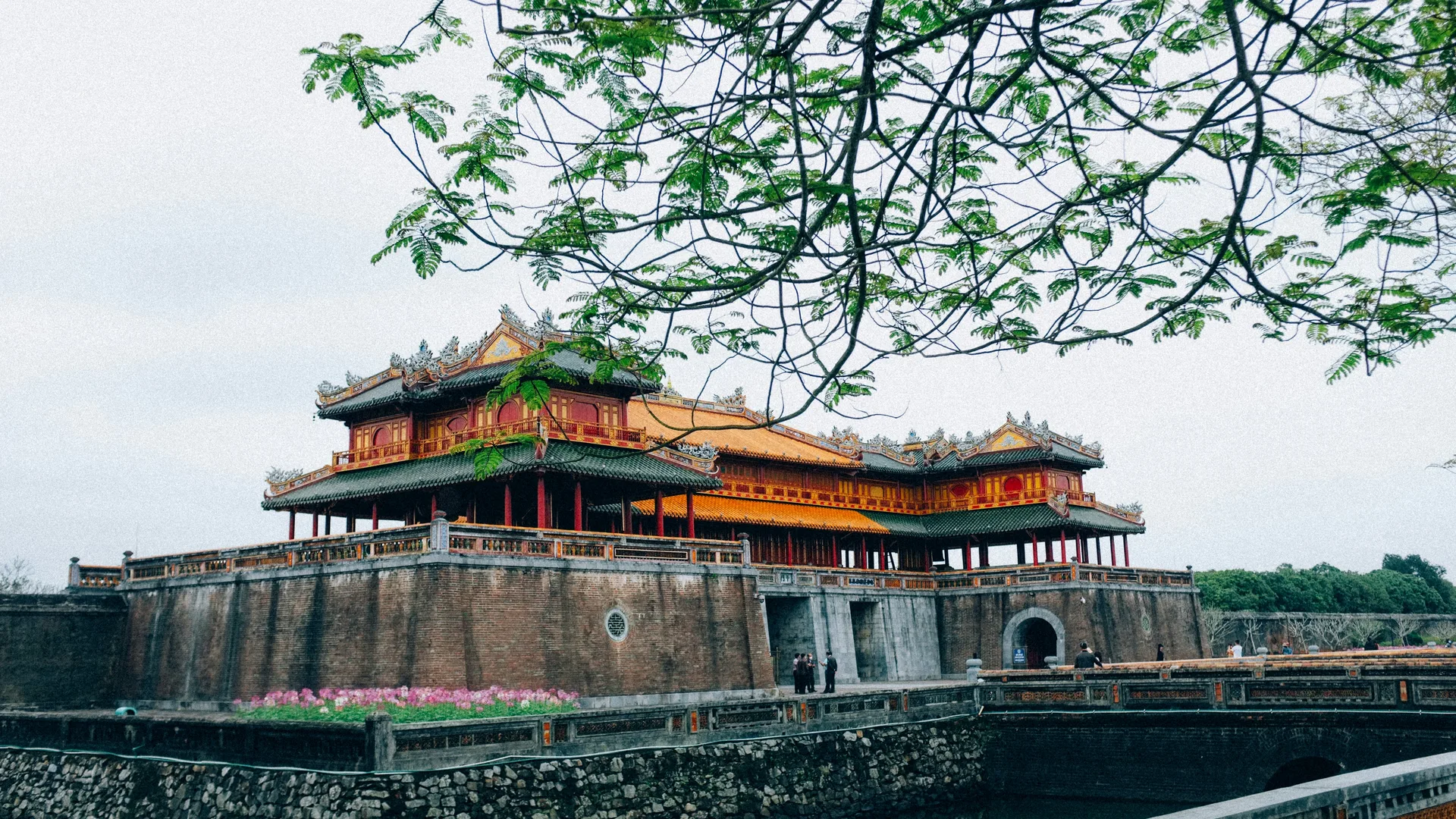
January and February are quiet, cool and dry. Visitor numbers are at their lowest, citadel queues are short, and the light is soft and even — good for photography of the Ngọ Môn Gate and the yellow walls of the Imperial City. The trade-off is occasional damp, with overnight temperatures dipping to 15°C and morning mist along the Perfume River. March marks the start of the most comfortable window. Temperatures climb to 24–28°C, rainfall is low, and the Royal Tombs gardens at Tự Đức and Minh Mạng come into full leaf. April carries the same dry, warm conditions and is widely considered the strongest single month for a full citadel-plus-tombs day. International visitor numbers are healthy but not yet at peak.
May through August is the hot dry season — reliably sunny and reliably uncomfortable in midday. Highs of 33–38°C with humidity above seventy percent make a 06:30 start at the Imperial City the only sensible plan, with the afternoon reserved for shaded tomb interiors or a Perfume River boat. September is transitional: still warm, but with rising rainfall risk. October and November are the peak of the monsoon, when Hue records the highest rainfall in Vietnam and parts of the Imperial Citadel can flood. The Hue Monuments Conservation Centre closes individual buildings or whole sites when conditions warrant. December returns to cool dry-ish conditions, though showers persist into early January.
Tết Nguyên Đán and the Lunar New Year Calendar
Tết Nguyên Đán — Vietnamese Lunar New Year — is the country's most important holiday and falls between late January and mid-February depending on the lunar calendar. For visitors to Hue this is a double-edged window. The citadel grounds are often beautifully decorated with kumquat trees, peach blossom and yellow apricot (mai vàng); the public spaces along the Perfume River come alive with flower markets and lion-dance performances. At the same time, the Hue Monuments Conservation Centre may operate on reduced hours during the three core Tết days, and many family-run restaurants close for the week. Plan around the dates each year: arriving the week before Tết and leaving on the first day of the new year gives you the festival atmosphere without the closure risk.
Domestic tourism spikes sharply for the full week surrounding Tết, with Vietnamese families travelling between provinces and the Hue Citadel drawing high local numbers. Hotels in central Hue typically raise prices and require longer minimum stays. International visitors who specifically want the cultural colour should book accommodation at least two months in advance; those who prefer a quieter visit should target the second half of February or early March, after Tết closures lift and crowds disperse. Concierge ticket bookings during Tết carry an additional verification step because operator portals sometimes show unexpected closure windows that resolve only on the day.
The Hue Festival and Other Cultural Windows
The Hue Festival (Festival Huế) is the city's flagship cultural event, traditionally held biennially across the Imperial Citadel and along the Perfume River. Programming spans court music performances staged at the Royal Theatre (Duyệt Thị Đường), reconstructions of Nguyễn-dynasty processions through the Ngọ Môn Gate, river parades on the Sông Hương, and contemporary art installations in the courtyards of the Forbidden Purple City. When active, the festival draws regional and international visitors and the citadel can feel crowded; tickets to specific performances sell out weeks in advance. Frequency and dates have varied in recent years — check the current programme with the Hue Monuments Conservation Centre or the provincial tourism authority before booking flights around a specific edition.
Outside the headline festival, smaller cultural windows are worth knowing about. The Huế nhã nhạc cung đình (royal court music) — inscribed by UNESCO on the Representative List of the Intangible Cultural Heritage of Humanity in 2008 — is performed at the Royal Theatre on a regular schedule during the main tourist months. The Buddhist Vesak commemorations in May see Thiên Mụ Pagoda, four kilometres upriver from the Citadel, decorated and busy with worshippers. National Day on 2 September brings flag ceremonies and crowds to the Ngọ Môn Gate. None of these are reasons to avoid Hue — they enrich the visit — but factoring them into your timed-entry slot for the Imperial City helps you sequence the day.
Flooding Risk and What to Do If Your Trip Lands in October or November
Central Vietnam's October–November rainfall is the highest in the country, and Hue sits at the wet centre of that band. The Perfume River regularly rises in late autumn; in serious events it overtops its banks and water enters the lower courtyards of the Imperial Citadel. The Hue Monuments Conservation Centre closes affected zones temporarily, draining and cleaning before reopening. Visiting in this window is not a write-off — the rain often falls in concentrated bursts with dry hours between, and a damp Forbidden Purple City under heavy cloud has a strong atmosphere — but flexibility is essential. Build at least one buffer day into the itinerary and avoid booking the Imperial City for your only available afternoon if the forecast looks heavy.
Practical kit makes a meaningful difference. Waterproof shoes (not flip-flops — the cobbles become slippery), a hooded rain jacket rather than an umbrella (the Ngọ Môn Gate concourse can be windy), and a dry bag for camera equipment cover most situations. Royal tombs vary in flood exposure: Tự Đức's lakeside complex absorbs rain comfortably, Khải Định's hillside steps drain fast, Minh Mạng's lower courts can puddle. If a closure occurs and we cannot deliver the booked entry, the concierge reschedules to the next available slot or refunds in full — the operator's closure decision is published the same morning and we monitor it for every confirmed booking.
Frequently asked
What is the single best month to visit Hue?
April delivers the strongest combination of dry weather, comfortable temperatures (24–30°C) and manageable crowds. March and February run a close second. May still works with an early start; June through August are reliably hot.
Is Hue worth visiting during the rainy season?
Yes, with caveats. October and November can be atmospheric and quieter, and rain often comes in concentrated bursts rather than all day. Build a buffer day into the itinerary in case the Imperial Citadel closes for flooding.
When exactly is Tết and how does it affect a Hue trip?
Tết Nguyên Đán falls between late January and mid-February based on the lunar calendar. The citadel may operate reduced hours over the three core Tết days. Visiting the week before Tết or after the first week of February avoids most closures.
How hot does Hue get in summer?
Daytime highs in May through August regularly reach 33–38°C with high humidity. A 06:30 start at the Imperial City, an air-conditioned car between tomb visits, and an afternoon swim or river boat are the standard summer strategy.
Will it really flood inside the Imperial Citadel?
Occasionally, yes. The Perfume River overtops in serious autumn weather and water can reach lower courtyards. The Hue Monuments Conservation Centre closes affected zones temporarily. Concierge bookings are refunded or rescheduled if the operator closes the site on your date.
Is the Hue Festival on every year?
Traditionally biennial, though programming and frequency have varied. Check the current calendar with the Hue Monuments Conservation Centre before planning a trip specifically around it. When active, it adds significantly to the citadel atmosphere but also to crowd density.
Which month has the best photography light?
March and April combine clear skies with softer light than midsummer. November and early December can produce dramatic post-storm conditions with cloud rolling across the Forbidden Purple City. Avoid midday in July and August — flat overhead light flattens the citadel walls.
How does Hue's climate compare with Hanoi and Hồ Chí Minh City?
Hue is wetter than both in autumn, hotter than Hanoi in summer, and cooler than Hồ Chí Minh City in winter. Travellers moving north to south often find Hue the most weather-sensitive stop on the itinerary.
Are the Royal Tombs affected by monsoon closures too?
Less than the Imperial Citadel because they sit on higher ground. Khải Định's hillside tomb drains fastest; Minh Mạng's lower courts can puddle in heavy rain. The Hue Monuments Conservation Centre publishes closures site by site.
When are the quietest weekdays at the citadel?
Tuesday to Thursday outside peak season (June–August and Tết week) deliver the lowest visitor counts. Weekends bring domestic day-trippers from Da Nang and Hoi An. An early morning slot on a Wednesday in March is as quiet as Hue gets.