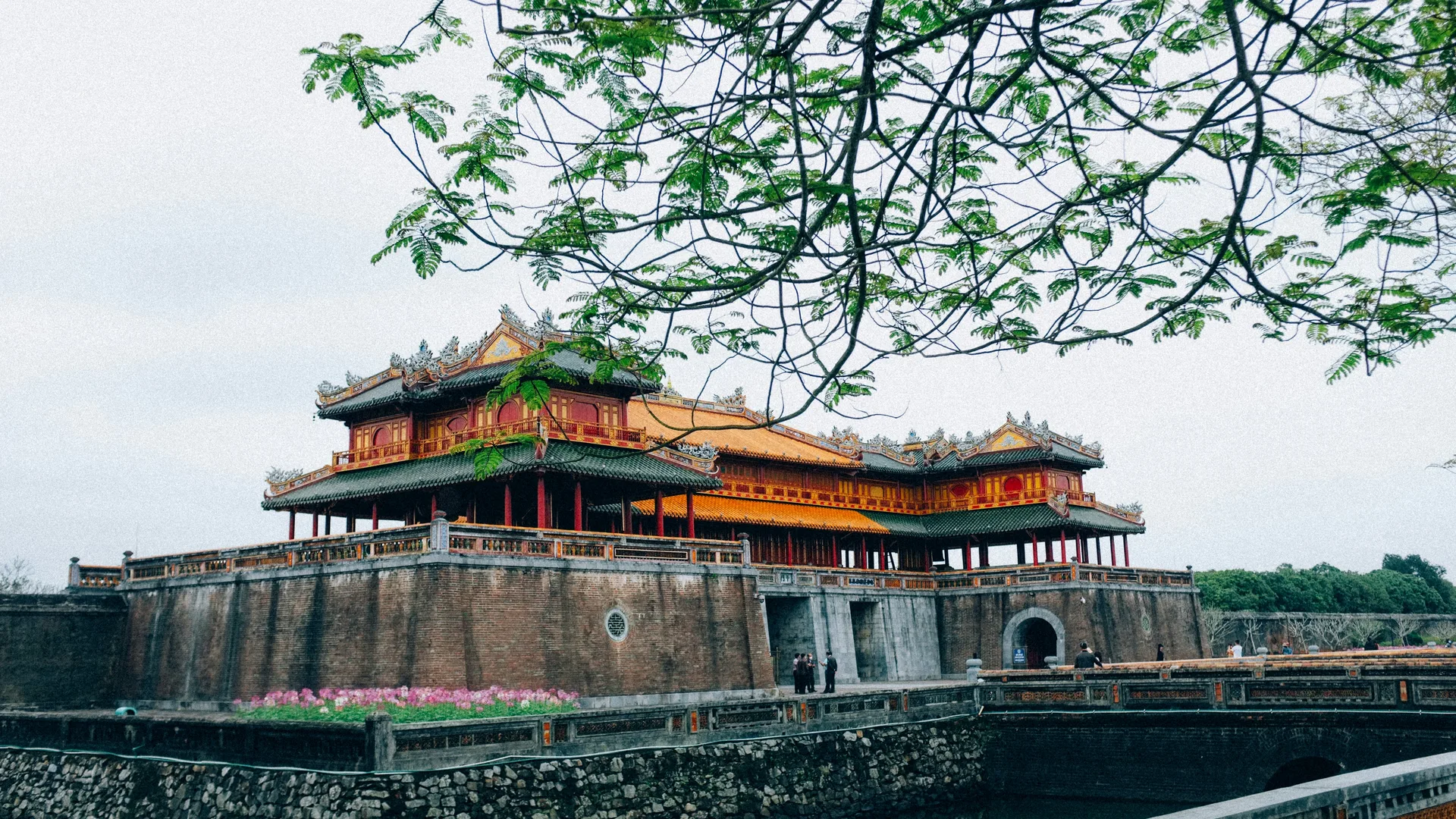
 Wejście bez kolejki
 Jak dotrzeć do Hue z Da Nang
Wszystkie realne opcje transportu z Da Nang do bram Imperial City w Hue — przybrzeżny pociąg, malowniczy przełęcz Hai Van Pass, trasa tunelem Hai Van Tunnel, wycieczki taksówką i motocyklem.
Da Nang to najpopularniejsza międzynarodowa brama do środkowego Wietnamu, obsługiwana przez Da Nang International Airport (DAD) z bezpośrednimi połączeniami z całej Azji oraz rozwijającymi się europejskimi trasami dalekiego zasięgu. Hue znajduje się około stu kilometrów na północ wzdłuż wybrzeża, oddzielone od Da Nang przez przedgórza Trường Sơn i słynną przełęcz Hai Van Pass — klimatyczną linię podziału między dwiema strefami pogodowymi środkowego Wietnamu. Podróż ta należy do najbardziej malowniczych w Azji Południowo-Wschodniej i można ją komfortowo odbyć w pół dnia w każdą stronę, dlatego wielu podróżnych bazuje w Da Nang lub pobliskim Hội An, traktując Hue jako cel długiej jednodniowej wycieczki. Niniejszy przewodnik omawia każdą realną opcję w kolejności odpowiadającej różnym profilom podróżnych: przybrzeżny pociąg Reunification Express, trasę drogową przez Hai Van Pass, szybszą jazdę taksówką tunelem Hai Van Tunnel oraz wycieczkę motocyklem uwielbianą przez niezależnych podróżników.
Pociąg Reunification Express wzdłuż wybrzeża
Odcinek kolejowy Da Nang–Hue wietnamskiego pociągu Reunification Express (Đường sắt Thống Nhất) to najbardziej satysfakcjonujący sposób odbycia tej podróży. Linia biegnie wzdłuż wybrzeża Hai Van, wspinając się przez serię tuneli wydrążonych w cyplu, przytulając się do klifów nad Morzem Południowochińskim. Czas podróży to około dwie i pół do trzech godzin w zależności od połączenia. Kilka pociągów dziennie kursuje w obu kierunkach; wagony z miękkimi siedzeniami są komfortowe, z półkami na bagaż nad każdym rzędem i dużymi oknami. Rezerwacja przynajmniej dzień wcześniej w szczycie sezonu (czerwiec–sierpień oraz tydzień Tết) jest wskazana — bilety tego samego dnia na stacji w Da Nang są możliwe poza sezonem, ale nie gwarantowane.
Prawa strona pociągu jadącego na północ (lewa w kierunku południowym) oferuje czystsze widoki na morze, gdy linia wyłania się z tuneli Hai Van. Najbardziej fotografowany odcinek znajduje się w okolicy Lăng Cô, gdzie pociąg przebiega nad długą, półksiężycowatą plażą, a laguna Lap An otwiera się na zachód; aparat fotograficzny powinien być gotowy około dziewięćdziesiąt minut po wyjeździe z Da Nang. Bilety można nabyć w kasie stacyjnej, przez oficjalną stronę Vietnam Railways oraz za pośrednictwem licencjonowanych platform rezerwacyjnych. Należy zabrać ze sobą wydrukowane potwierdzenie rezerwacji i paszport — od podróżnych międzynarodowych rutynowo wymaga się okazania obu dokumentów. Ze stacji w Hue to pięć minut taksówką lub piętnaście minut spacerem przez most Trường Tiền na południowy brzeg rzeki Perfume River i do Cytadeli.
Hai Van Pass: Malownicza trasa drogowa
Przełęcz Hai Van Pass (Đèo Hải Vân, dosłownie Przełęcz Morskich Chmur) to stara trasa National Route 1 wspinająca się przez cypel Trường Sơn oddzielający Da Nang od Hue. Droga osiąga szczyt na wysokości 496 metrów i oferuje jedne z najbardziej kinowych widoków w Wietnamie — szerokie zakręty nad wybrzeżem, bunkry i stanowiska ogniowe pozostałe po kolejnych konfliktach XX wieku, a w pogodny dzień masyw Bạch Mã w głębi lądu. Na przejazd prywatnym samochodem trasą przez przełęcz z centrum Da Nang do centrum Hue należy przewidzieć dwie i pół do trzech godzin, plus jeden lub dwa przystanki na szczycie i przy plaży Lăng Cô na zdjęcia. To trasa dla tych, dla których sama podróż jest połową celu.
Prywatne samochody z anglojęzycznymi kierowcami można zarezerwować z wyprzedzeniem przez hotele w Da Nang oraz platformy internetowe. Standardowa półdniowa lub całodniowa wycieczka przez przełęcz obejmuje odbiór, przystanki fotograficzne przy Hải Vân Quan (odrestaurowana fortyfikowana brama na szczycie), wioskę rybacką Lăng Cô i lagunę oraz warsztaty kamieniarskie koło Non Nước po stronie Da Nang. Wielu kierowców można wynająć w jedną stronę do Hue, pozostawiając Państwa w centrum Hue późnym popołudniem, co pozwala na zwiedzanie cytadeli następnego dnia. Przełęcz bywa okresowo zamykana na czas usuwania osuwisk w porze deszczowej październik–listopad; zaleca się sprawdzenie sytuacji dzień wcześniej jesienią. Choroba lokomocyjna na zakrętach to realne zagrożenie — warto usiąść na przednim siedzeniu pasażera i poprosić o wolniejszą jazdę w razie potrzeby.
Trasa taksówką przez tunel Hai Van Tunnel
Tunel Hai Van to najdłuższy tunel drogowy w Azji Południowo-Wschodniej i najszybsza alternatywa dla przeprawy przez przełęcz. Większość nowoczesnego ruchu dalekobieżnego między Da Nang a Hue korzysta z tunelu, skracając podróż do około dwóch–dwóch i pół godziny między punktami docelowymi. Prywatna taksówka lub wcześniej zarezerwowany transfer z hotelu w Da Nang do hotelu w Hue przez tunel to najbardziej efektywna opcja bezpośredniego połączenia, szczególnie dla rodzin z małymi dziećmi, podróżnych z dużym bagażem lub osób ograniczonych czasem. Rezerwacja z wyprzedzeniem za pośrednictwem licencjonowanego operatora pozwala uniknąć targowania się z taksówkarzami na lotnisku i gwarantuje ustaloną cenę.
Trasa przez tunel wymienia widoki na szybkość. Wewnątrz samego tunelu nie ma nic do oglądania, a dojazdy po obu stronach prowadzą przez typową prowincjonalną okolicę. Jeśli chcą Państwo połączyć widoki w jednym kierunku z szybkością w drugim, proponujemy pociąg na północ (powolna jazda wzdłuż klifów wybrzeża) oraz taksówkę przez tunel na południe (szybki powrót), lub prywatny samochód przez przełęcz Hai Van w drodze do Hue z pociągiem powrotnym do Da Nang. Grab działa zarówno w Da Nang, jak i Hue, jednak większość kierowców Grab nie podejmuje się dalekich przejazdów międzymiastowych; wcześniej zarezerwowana usługa transferu to bardziej niezawodny wybór dla podróży międzyprowincjonalnej. Proszę potwierdzić trasę (przełęcz czy tunel) podczas rezerwacji, aby uniknąć niespodzianek dotyczących czasu podróży.
Jednodniowe wyprawy motocyklowe i wycieczki Easy Rider
Wynajęcie motocykla w Da Nang i przejazd przez przełęcz Hai Van do Hue to ugruntowana tradycja backpackerów i nadal doskonała opcja dla pewnych siebie kierowców z ważnymi prawami jazdy. Należy zarezerwować komfortowe pół dnia w każdym kierunku, cztery–pięć godzin czasu jazdy, z dłuższymi przystankami na szczycie oraz w Lăng Cô. Nawierzchnia drogi na samej przełęczy jest generalnie dobra, ale deszcz może spowodować żwir i luźne powierzchnie w zakrętach; odcinek powyżej Lăng Cô ma poważne spadki i wymaga uwagi. Wypożyczalnie w dzielnicy turystycznej An Thượng w Da Nang wynajmują motocykle 110cc półautomatyczne i 150cc manualne na dobę, zazwyczaj wymagając paszportu jako kaucji.
Usługi Easy Rider — wycieczki motocyklowe z doświadczonym lokalnym kierowcą prowadzącym pojazd, podczas gdy gość jedzie na tylnym siedzeniu — rozwiązują problem praw jazdy i pewności siebie dla odwiedzających pragnących przeżyć to doświadczenie bez ryzyka. Dzień Easy Rider z Da Nang do Hue zazwyczaj obejmuje przełęcz Hai Van, Lăng Cô, lagunę Lap An oraz wcześniej zarezerwowany przewóz bagażu samochodem do Hue, przy czym kierowca kontynuuje podróż do miasta na zwiedzanie Cytadeli. Wietnamskie prawo wymaga ważnych praw jazdy motocyklowej (lub Międzynarodowego Prawa Jazdy z adnotacją o motocyklach) dla każdego kierowcy; egzekwowanie przepisów bywa różne, jednak ubezpieczyciele podróżni, w tym EKTA, wymagają ważnych praw jazdy przy wszelkich roszczeniach związanych z motocyklami. Kaski są obowiązkowe zarówno prawnie, jak i praktycznie.
Z lotniska w Da Nang bezpośrednio do Hue
Międzynarodowe lotnisko Da Nang (DAD) znajduje się w obrębie miasta, dziesięć minut od dworca kolejowego i dzielnicy turystycznej An Thượng. Wielu międzynarodowych gości ląduje późnym popołudniem i woli zatrzymać się w Da Nang lub Hội An na noc przed jednodniową wycieczką do Hue; inni wybierają bezpośredni transfer z hali przylotów do wcześniej zarezerwowanego pojazdu na podróż na północ. Oba podejścia są słuszne. Transfer bezpośredni trwa dwie–dwie i pół godziny przez tunel Hai Van i pozwala dotrzeć do centralnego hotelu w Hue na późną kolację. Zaletą jest maksymalne wykorzystanie porannego zwiedzania Cesarskiego Miasta następnego dnia; wadą jest przejazd przez przełęcz po długim locie, jeśli wybiorą Państwo malowniczą trasę o zachodzie słońca.
Jeśli Państwa program obejmuje Hội An (dwadzieścia pięć kilometrów na południe od Da Nang), praktyczna decyzja dotyczy tego, czy Hue stanie się długą jednodniową wycieczką z powrotem z Hội An, nocnym wyjazdem, czy też osobnym dwunocnym pobytem. Podróż z Hội An do Hue i z powrotem to dwie i pół–trzy godziny w każdą stronę przez tunel — pozostawiając pięć–sześć godzin na miejscu na Cytadelę i jedno mauzoleum w szybkim tempie. Większość rezerwacji concierge opiera się na dwóch wyraźnych scenariuszach: pociąg z Da Nang rano, cytadela i jedno mauzoleum po południu, pociąg z powrotem; lub nocleg w Hue i pełny dzień z Cytadelą i trzema mauzoleami z prywatnym autem. Wybór zależy od apetytu i tempa.
Najczęściej zadawane pytania
Jaka jest najszybsza trasa z Da Nang do Hue?
Wcześniej zarezerwowany prywatny transfer przez tunel Hai Van — dwie–dwie i pół godziny bezpośrednio z hotelu w Da Nang do hotelu w Hue. Lot między tymi miastami nie jest realistyczny; jedyne pobliskie lotnisko to wspólny port lotniczy Phu Bai (HUI) na południe od Hue.
Która trasa jest bardziej malownicza – pociąg czy droga przez przełęcz Hai Van Pass?
Obie trasy są spektakularne. Pociąg przebiega wzdłuż klifów i przez nadmorskie tunele; droga wspina się na wysokość 496 metrów do szczytu Hải Vân Quan, oferując rozległe widoki na zatokę. Droga umożliwia postoje; pociąg nie.
Czy mogę odwiedzić Hue w ramach jednodniowej wycieczki z Da Nang?
Tak – pociąg rano, cytadela i jedno mauzoleum po południu, powrót wieczorem. To program napięty, ale wykonalny. Dla zwiedzenia cytadeli i trzech mauzoleów nocleg w Hue będzie zdecydowanie wygodniejszym rozwiązaniem.
Ile kosztuje prywatny samochód z Da Nang do Hue?
Ceny różnią się w zależności od operatora, sezonu i trasy (przełęcz czy tunel). Rezerwacja z wyprzedzeniem u licencjonowanej firmy transferowej zapewnia zazwyczaj stałą cenę na piśmie i pozwala uniknąć negocjacji z taksówkarzami na lotnisku.
Czy przejazd motocyklem przez przełęcz Hai Van Pass jest bezpieczny?
Jest bezpieczny dla doświadczonych kierowców posiadających ważne prawo jazdy, w suchych warunkach. Deszcz powoduje osuwiska żwiru i luźne podłoże w zakrętach. Prawo wietnamskie wymaga ważnego prawa jazdy na motocykl; ubezpieczenia podróżne zazwyczaj nie pokrywają roszczeń związanych z motocyklami bez takiego dokumentu.
Czy mogę zarezerwować bilet na pociąg online spoza Wietnamu?
Tak – oficjalna strona kolei wietnamskich (dsvn.vn) oraz licencjonowane platformy zewnętrzne akceptują międzynarodowe karty płatnicze. W szczycie sezonu warto rezerwować co najmniej dzień wcześniej i zabrać ze sobą wydrukowane potwierdzenie.
Czy pociąg kursuje nocą między Da Nang a Hue?
Niektóre składy Reunification Express przebiegają przez Da Nang i Hue w godzinach nocnych, jednak na tym krótkim odcinku znacznie bardziej przydatne są połączenia dzienne — cały urok podróży polega przecież na podziwianiu nadmorskich krajobrazów.
Jak dostać się ze stacji w Hue do Cesarskiej Cytadeli?
Stacja w Hue znajduje się na południowym brzegu rzeki Perfume. Cytadela leży po północnej stronie, zaledwie pięć minut taksówką lub piętnaście minut spacerem przez most Trường Tiền. Z placu przed dworcem kursują taksówki Grab oraz licencjonowane taksówki z taksometrami.
Czy mogę przejechać przez przełęcz Hai Van, gdy droga jest zamknięta?
Nie. Droga bywa okresowo zamykana w celu usunięcia osuwisk w porze deszczowej (październik–listopad). Zazwyczaj czynny pozostaje alternatywny tunel Hai Van. W okresie jesiennym zalecamy weryfikację sytuacji na dzień przed podróżą.
Czy z bagażem w pociągu mogą być problemy?
Standardowe walizki mieszczą się na półkach bagażowych nad siedzeniami w każdym rzędzie. Większe torby można umieścić przy końcach wagonu. W klasie z miękkimi siedzeniami nie obowiązuje formalny limit wagowy, ale za gabaryty niestandardowe może być wymagany osobny bilet bagażowy.